A listening guide
Flamenco styles you may hear
Six flamenco palos explained for a first-time audience, from soleá to guajira, with what each sounds like and how to follow it in a Madrid show.
Reserve your flamenco night ↗Quick answer
Each flamenco style, or palo, has its own rhythm, mode and mood. Six that a first-time audience can learn quickly are soleá, seguiriya, fandango, tangos, farruca and guajira. Flamenco de Leones says its shows span all styles, and the artists choose the evening, so this is a guide to what to listen for, not a programme.
What a palo is
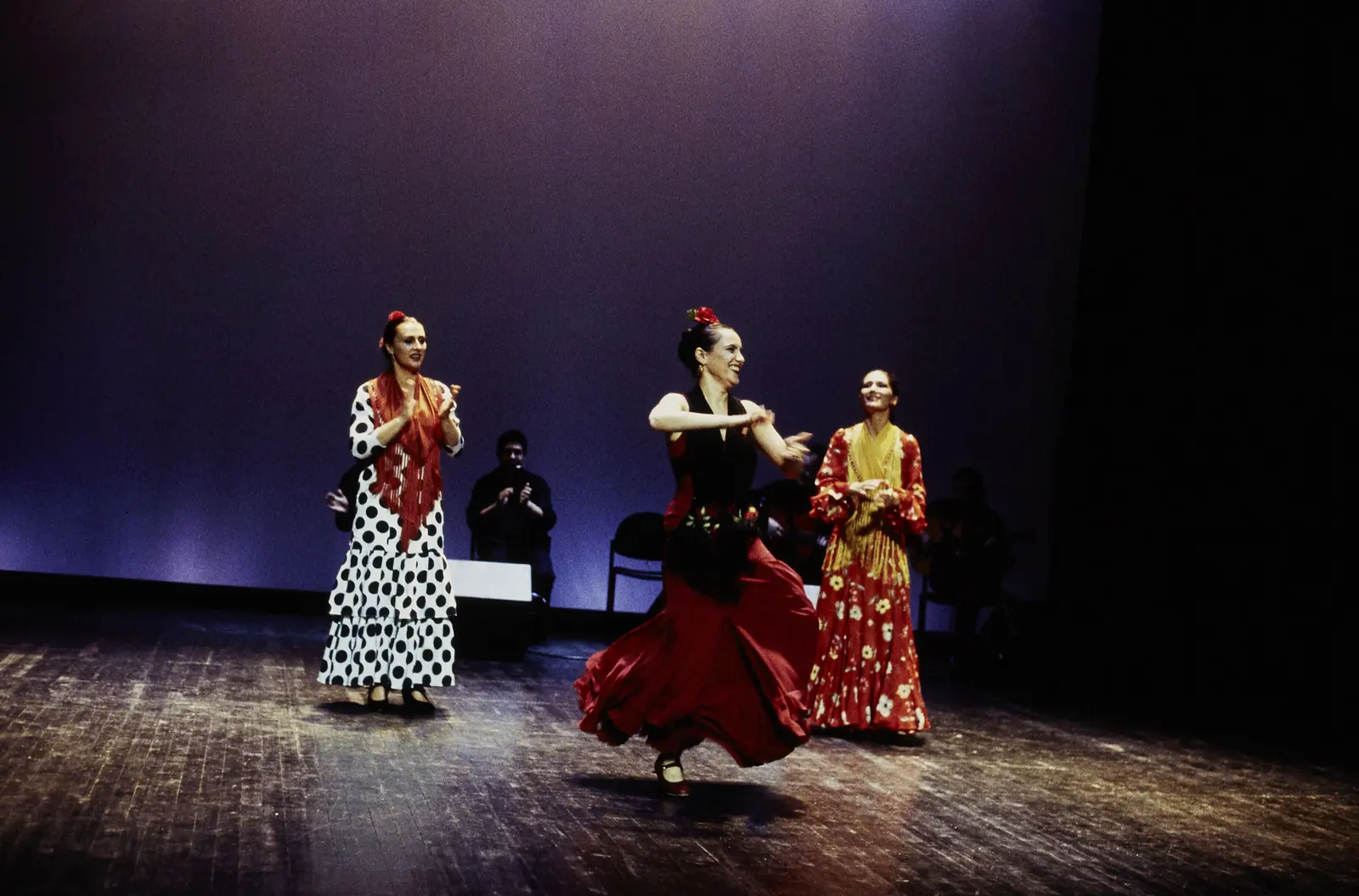
Wikipedia explains that the musical identity of a palo may depend on several features at once: the rhythmic cycle, the mode, the chord progression, the form of the verses, the place it comes from and the way it is performed. In practice a palo is the name for a kind of song and dance, and each has its own mood. The singer announces nothing, so a few names and sounds will help you follow the evening.
How to follow the rhythm
Wikipedia names three things that define flamenco: a flamenco mode, the compás and the performer. The compás is the rhythm, and it is fundamental. If no guitarist is available it is kept by hand-clapping, the palmas, or by hitting a table with the knuckles. Flamenco uses three basic counts, and one of them is a twelve-beat cycle unique to the art. You do not need to count it. Tap along with the palmas and the shape will come.
Soleá
Among the most basic palos of flamenco, the soleá probably began with the Calé Romani of Cádiz or Seville. One guitar usually accompanies it, alone. Wikipedia notes that it is sometimes called the mother of the palos, although it is not the oldest, and that its cycle has twelve beats. A single guitar under a long, steady twelve-beat cycle is the sound to listen for.
Seguiriya
The seguiriya belongs to the cante jondo category, the deep song. Wikipedia describes it as a deep, expressive style among the most important in flamenco, and as purely Romani in origin, unlike other palos. It also uses a twelve-count cycle, with accents that fall differently from the soleá. It is the style to listen for when a song sounds at its most serious.
Fandango
Fandango is a lively partner dance originating in Spain, usually in triple metre, traditionally accompanied by guitars, castanets, tambourine or hand-clapping. A sung fandango has an instrumental introduction followed by variations, and its verses follow a set structure. Wikipedia adds that the flamenco fandangos are a family of different origin from the soleá. In a show you will hear it as a song with a triple-time pulse.
Tangos
In flamenco usage, tangos names a basic palo that may be sung, played or danced, in a lively binary or quadruple metre. Despite the name it is not the Argentine tango, and the Instituto Andaluz del Flamenco places its development between Cádiz and Seville. Tientos, its slower relative, runs on the same compás. Listen for the lively pulse that sets it apart from the deeper palos. Do not expect an embracing couple.
Farruca and guajira
The farruca took shape around the turn of the twentieth century and is usually counted among the lighter, more stylised palos. Wikipedia says it is traditionally associated with Galicia, though its exact origin is not certain. The guajira is based on the Cuban punto guajiro and is a cante de ida y vuelta, a song that travelled to the Americas and came back. It is traditionally danced, and the dancer often uses a large Spanish fan.
Read next: Getting there and what to expect
Frequently asked questions
Will I hear all six palos?
Not necessarily. The artists pick the evening, and the venue says its performances cover all styles of flamenco.
Is flamenco tangos the Argentine tango?
No. Flamenco tangos is a separate Andalusian form, and the Instituto Andaluz del Flamenco rejects a direct link with Argentine tango.
What does cante jondo mean?
It means deep song, the most serious group of flamenco styles, which includes the seguiriya.
Sources